Tyre Size Fitment Guide Southern Africa
Tyre Load Index Chart
Tyre load index is a numeral value indicating the maximum load weight that each tyre can carry. The maximum capacity per tyre is indicated in kilogram (kg). Load rating and speed index should be looked at together when buying new tyres.
The higher the tyre’s load index number, the heavier the load capacity. Example: a load index of 62 can carry up to 265kg per tyre in comparison to a load index of 126 that can carry up to 1 700kg per tyre.
How Do I Find My Vehicle’s Load Index?
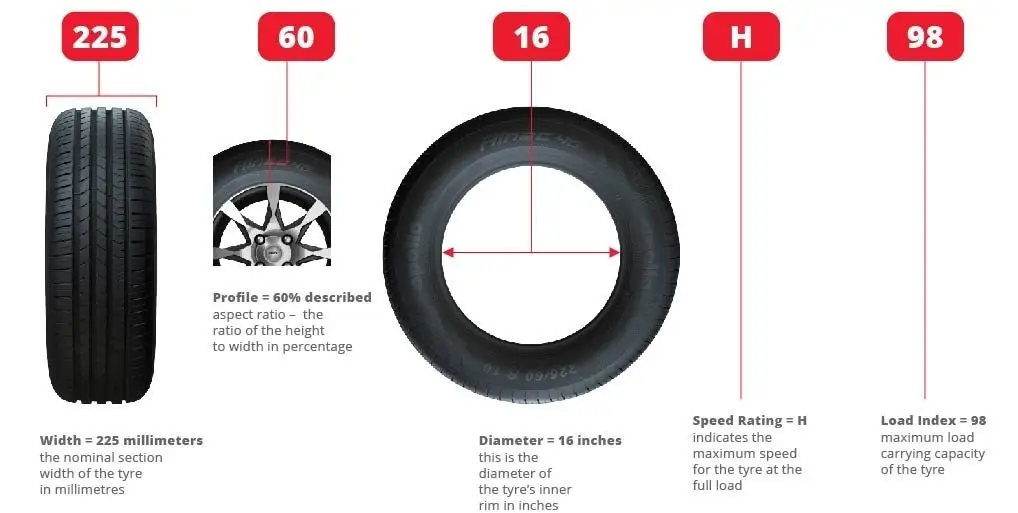
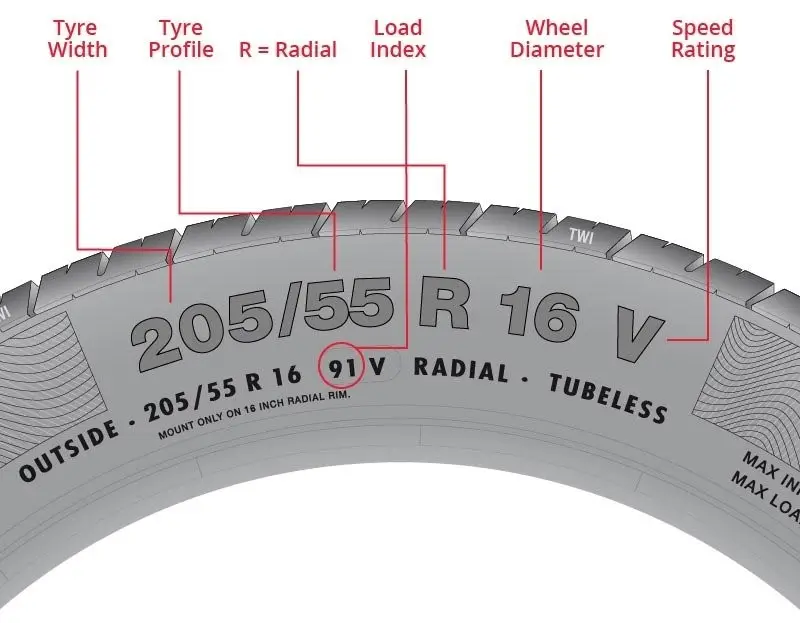
The load index is normally indicated after the diameter reading, before the speed rating on the tyre’s sidewall. Example: 205/55R16 91V where “91” is the load index and “V” is the speed rating. It’s important to check your user manual for the vehicle manufacturer recommended load index suited for your vehicle’s weight and usage..
What is XL?
XL indicates “Extra Load” or reinforced tyres designed for heavier vehicles. XL tyres have a greater load capacity due to their design, making it possible for higher air pressure to be maintained within the tyre.
Tyre Load Index Chart Table
Tyre speed rating chart | Southern Africa
The tyre speed rating chart was established to match the speed capability of the tyre to that of the vehicle. View the speed rating chart for South Africa below.
Speed rating of a tyre is based on laboratory tests, under specific controlled conditions, where the tyre is pressed against a large diameter metal drum to reflect its appropriate load and run at ever increasing speeds until the tyre’s required speed has been met or the tyre fails.
Important: speed ratings only apply to tyres that have not been damaged, under-inflated, overloaded or altered. Does not apply to truck tyres.
Tyre replacement: most tyre manufacturers recommend that vehicle owners replace a speed-rated tyre with a tyre of equivalent or greater speed rating.
Speed Rating Chart – Designation:
L 120km/h 4×4 & Bakkie Tyres
M 130km/h Spare Tyre
N 140km/h Spare Tyre
P 150km/h Winter 4×4 Tyres
Q 160km/h Winter Tyres
R 170km/h 4×4 & Bakkies Tyres
S 180km/h Family Sedans & Van Tyres
T 190km/h Family Sedans & Van Tyres
U 200km/h Sedans & Coupe Tyres
H 210km/h Sport Sedans & Coupe Tyres
V 240km/h Sport Sedans, Coupes & Sports Car Tyres
W 270km/h Exotic Sports Car Tyres
Y 300km/h Exotic Sports Car Tyres
ZR 240km/h+ Sports Car Tyres
Speed Ratings Origin & Further Info
Tyre speed ratings were introduced by Germany, due to their Autobahn (famous highway system) which has no federally mandated speed limit for some classes of vehicles.
Speed ratings for tyres range from A (the lowest) to Y (the highest), however, they don’t always follow alphabetically as H is rated between U and V.
Z was the highest speed rate until W and Y were used to match highest speeds of exotic sports cars.
Do speed ratings only refer to speed?
Vehicle manufacturers recommended speed ratings can be found in either the owner’s manual, driver’s side door, glove box door or fuel tank hatch.
View your current speed rating by checking the sidewall of your car’s tyres. The speed rating is normally the last character in the tyre’s size code, for example: 205/55R16 91V where “V” is the speed rating.
Tyre Construction
When it comes to tyre structure, there are two main types. These are cross-ply and radial. But what does this mean? In this article, we are going to be taking you through what the difference in each construction is and their varying types of tread designs.
Cross-Ply
When a tyre has been manufactured with a cross-ply construction, this means it’s nylon chords have been crossed diagonally over each other. These chords are then layered with thick rubber piles. This provides the tyre with tough, rigid sidewalls to protect the tyre. Whilst cross-ply tyres are tough and provide higher resistance against sidewall damage, they possess a higher rolling resistance. This can cause the tyres to heat up quickly increasing the air pressure within the tyres.
Radial
So, what is the radial construction? Radial construction is one that has developed alongside the development of tyre technology. Radial is known to be more of a flexible tyre. They are constructed with chords that have been rubber bonded and strategically placed so that they run across the circumference of the whole tyre. The radial piles are then covered in a casing, usually made from steel or chords, and then covered totally by the rubber tread. Radial tyres are a popular choice when motorists are looking for a tyre that offers greater comfort, water and heat resistance, as well as improved fuel economy.
There are many individual elements that make up these two different types of constructions. These include the tread and sidewall, and more.
Tread
The tyre tread is a rubber compound that overlays the construction of the entire tyre. As the tread covers the circumference of the tyre, it is the only part of the tyre that is always in contact with the road and can be designed in multiple ways, depending on the needs of the vehicle and the driver. All tread patterns have a legal limit of 1.6mm. They are all designed and developed for performance in varying driving conditions.
Chafer
The chafer is evident in both cross-ply tyres and radial tyres. On cross-ply tyres, the chafer is a lining between the body of the tyre and the rim. This prevents the tyres from chafing and wearing down. In radial tyres, the chafer works as added reinforcement that strengthens the tyre and converts the forces from the torque.
Ply
The ply is similarly composed of nylon piles or steel chords and is there to confine the pressure of the tyres. The ply absorbs any braking or steering shocks whilst driving. This provides the driver with a more comfortable and quieter ride.
Tyre Manufacture Date:
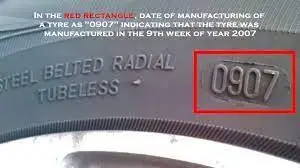
The date a tyre was manufactured can be found stamped on its sidewall. The markings are coded but are very easy to decode and understand.
On these tyres the date codes are 4708 and 0907. This means the tyre was manufactured on the first tyre is 47th week of the year 2008 and second tyre 9th week of the year 2007.
Lifespan of vehicle tyre
Ten years is a maximum
There are different thoughts in the market that range from 5 to10 years, If the tyres haven’t been replaced 10 years after their date of manufacture, as a precaution, Michelin recommends replacing them with new tyres. Even if they appear to be in a usable condition and have not been worn down to the tread wear indicator. Most the market recement that tyres should be replaced after 5 years.
Tyre construction: